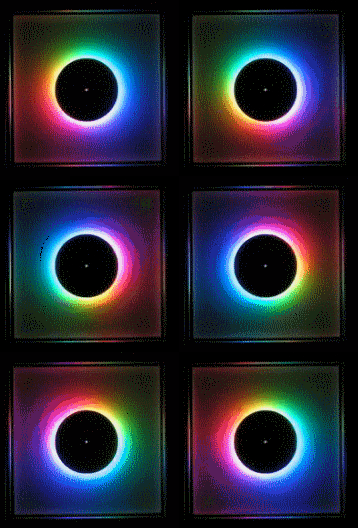

- Few, simple standard instructions which cover the general usage of lightning sequences
- scalability (number of lights)
- Alternatively 16 to 4096 or more levels of brightness per LED, depending on performance of CPU or PWM mode.
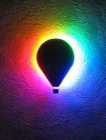
13 RGB-LEDs
controlled by "LightStack"
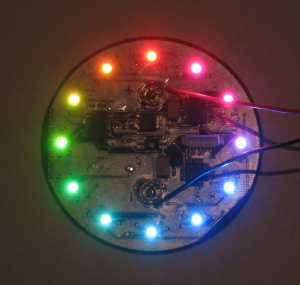
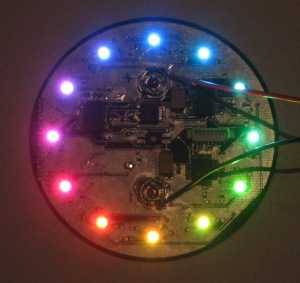
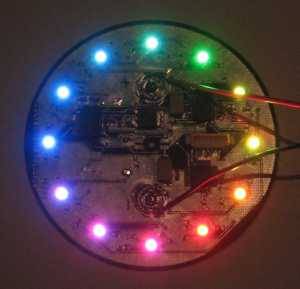
Dynamic color changes
User-specific light controls
Loadable light sequences
DMX control units
Light controls of every description
Fast prototyping, generation and modification of light sequences in few seconds
Easy portability by hardware independence
 |
 |
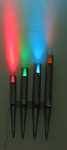
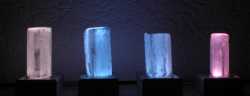
four 1 W LEDs, controlled with "LightStack"
In general, LightStack instructions contain two time values, a minimum and a maximum time for the instruction, and two brightness values, a minimum and a maximum brightness value. LightStack always uses a random value between minimum and maximum. To provide fix values, simlpy set both values to the same data.
Times are 16 bit values, time base is the provided frequency (typically 100 Hz), hence maximum time value is 655,35 seconds.
For standard instructions,16 virtual brightness ranges (4 bit) are supported, to provide efficient programming codes and to allow hardware independence. These values for the brightness are also selected between a minimum and a maximum value, so the brightness value per light is fully coded in only one byte. In typical light controls, more than 16 brightness levels are supported, by example 4096 ranges with 12 bit PWM control. LightStack internally calculates brightness values with 16 bit resolution. So the 4 bit brightness values are first expanded to the 16 bit values, and the different values between 2 instructions are computed by interpolation based on the selected base frequency. Then the so calculated values may be converted by a user supplied function or table to the hardware supported brightness values, including the transformation of non-linearity of the LED-brightness according to the control, and also the non-linearity of the eye-sensitivity.
If the 16 virtual brightness levels are not sufficent, the user may also select the up to 65635 real brightness levels by (not so efficient) extended LightStack instructions.
Rothspitzstr. 9a
81476 München
info@lightstack.com